
Alcázar Archaeological Site
Archeological siteCastleÉcija, España
© 2026 Content Copyrighted and/or under License from Turismo de Andalucía. All rights reserved. No scraping or reproduction of this content allowed.
Description
Published by

The Alcázar Archaeological Site occupies 5,480 square metres and is located right in the historical town centre of Écija and is a witness to the course of history.
The different archaeological digs undertaken since 1999 provide evidence of settlement since the 9th century BC, and the area has seen continuous use right up to the present day.
The first settlers chose this location for strategic reasons, because it is high up and near the Genil River. The oldest buildings belong to the Turdetano period, the 4th and 5th centuries BC, and their function was related to worship.
However, it is the Roman era that stands out from the rest with exceptional discoveries, like the mosaic of Los Amores de Zeus, measuring 40 square metres, found in an excellent state of preservation and listed by the National Geographic as one of the ten greatest discoveries of the year in 2015.
Another significant feature are a number of rooms decorated with colourful marble paving (opus sectile) and original wall paintings.
During the al-Andalus period, the fortress of Istiya was built here, with walls dating back to the 11th century.
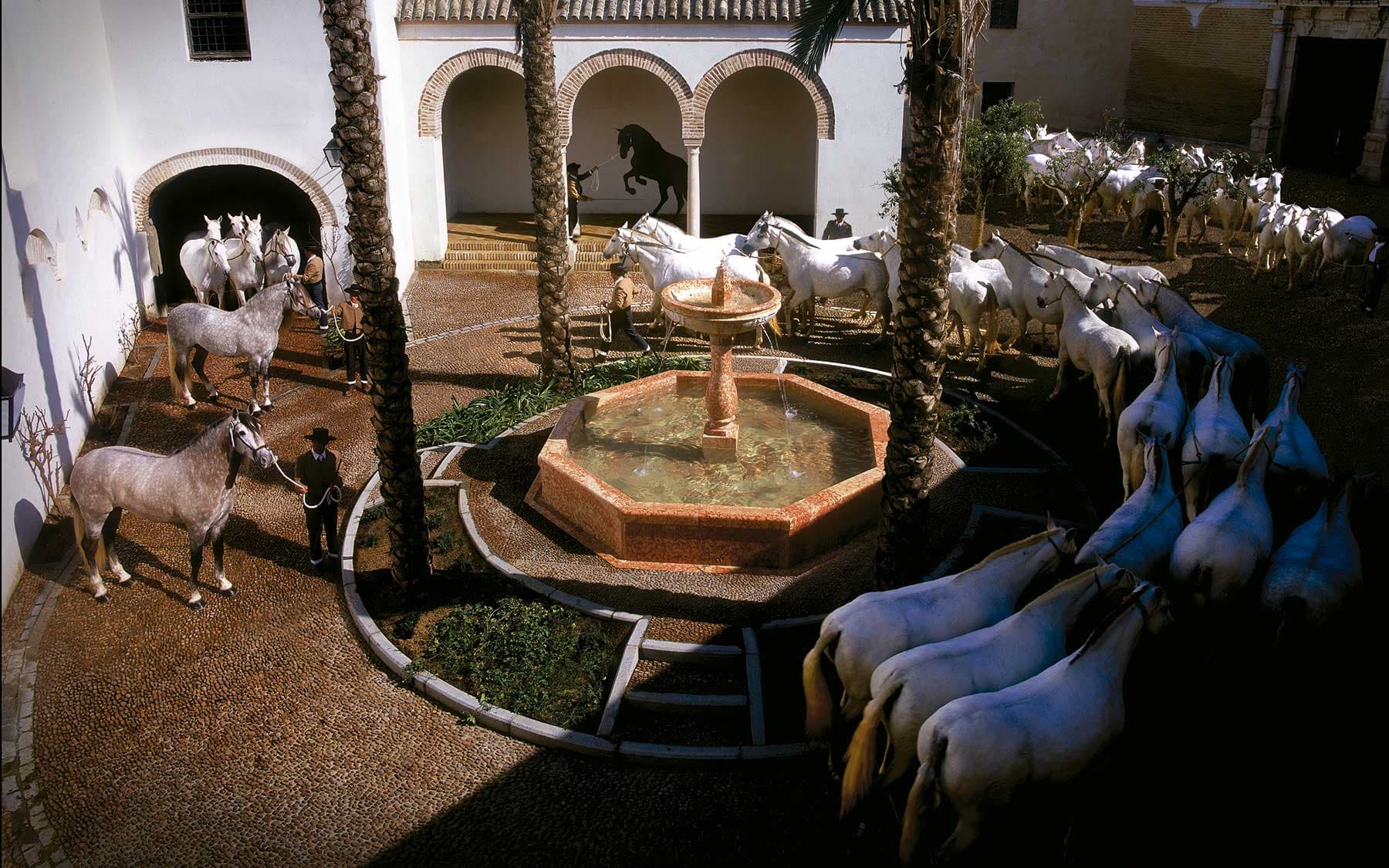
After the Christian Conquest in 1240, the Alcázar Archaeological Site was administered by a number of governors appointed by the king. Later, in the eighteenth century it became a horse arena, which is why this part of the city is commonly known as the "Picadero".
A platform has been provided giving access to the walls surrounding the city from which you get a marvellous panoramic view of Écija, declared a Historic-Artistic Site in 1966.
Contact
ecija@ciudadesmedias.org
Send emailhttps://ciudadesmedias.org/ciudad/ecija-sevilla
Visit websiteLocation
Calle Merced s/n
Start navigationLocation
Published by

Turismo de Andalucía
Málaga (España)